
TestHub Team
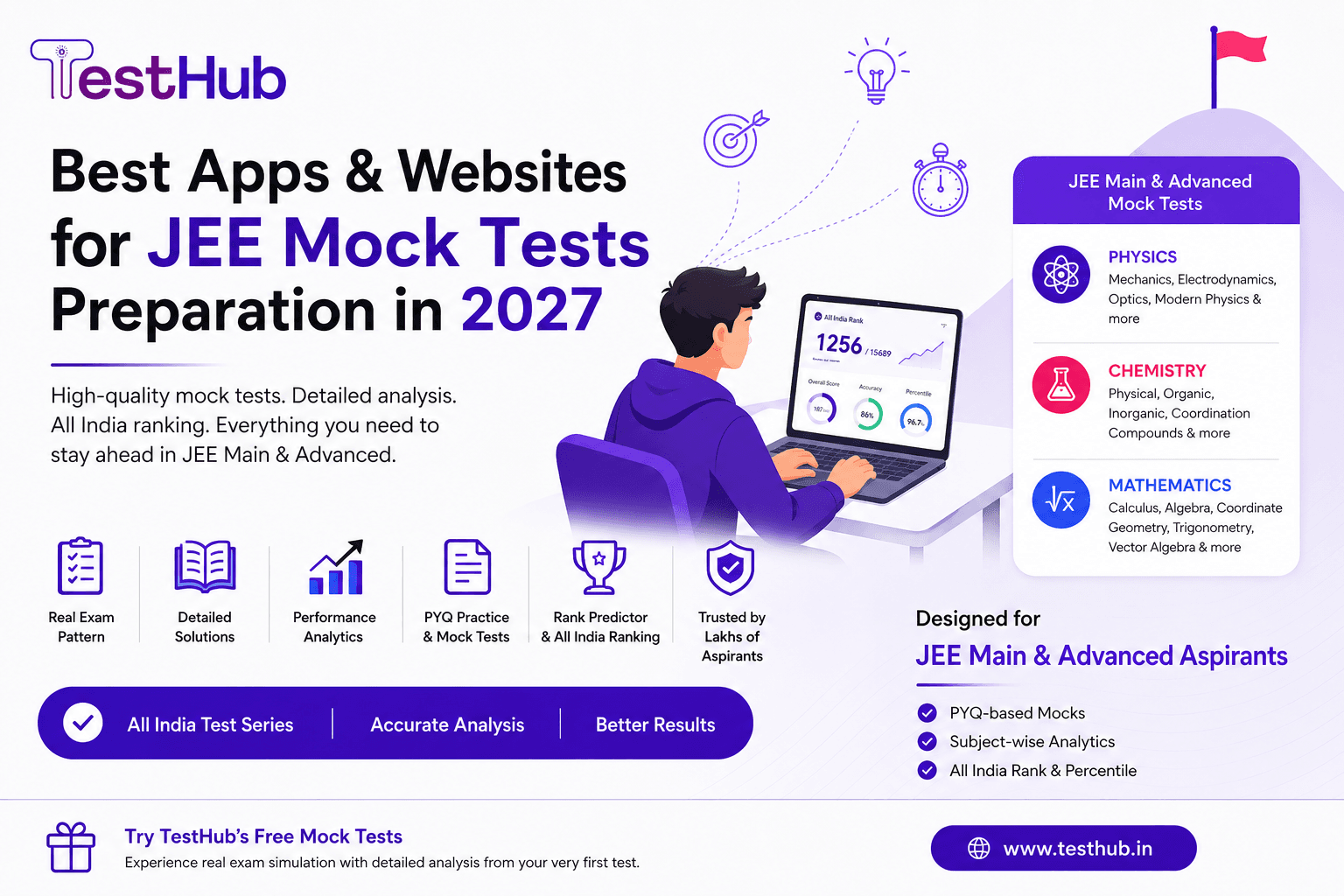
Best Apps and Websites for JEE Mock Tests Preparation (2027 Guide)
Choosing the best JEE mock test app depends on your preparation stage and what you actually need from a testing platform. This guide compares the major categories—from coaching apps and free PYQ platforms to dedicated mock test websites—and explains how to choose the right option for JEE Main and Advanced preparation.
If you've ever typed "best app for JEE mock tests" into Google late at night, you already know the problem there are dozens of options, every one claims to be the best, and none of the listings actually help you figure out which type of platform fits your specific prep style. This guide breaks it down differently: instead of a generic ranked list, it walks through the actual categories of apps and websites available for JEE mock test preparation, what each is genuinely good for, and how to pick the right one for where you are in your prep.
Why the "Right" App Depends on Your Prep Stage
Not every mock test platform is built for the same purpose. Some are designed to bundle testing with full instructional content, some focus purely on high-volume practice, and some exist mainly to give you free access to previous year questions. Picking based on brand recognition alone often means ending up with a platform that doesn't actually match what you need right now, whether that's foundational practice, high-frequency full-length mocks, or detailed post-test analysis.
Category 1: Coaching-Bundled Test Series Apps
Many large coaching institutes offer their own apps, where mock tests come bundled with classroom or video-lecture content. These tend to work well if you're already enrolled in that institute's program, since the tests are usually paced to match their syllabus coverage. The downside is that you typically can't access just the testing feature you're paying for and navigating an entire course structure, which can feel heavy if all you actually need is more testing volume and feedback.
Best for: Students already enrolled in a coaching program looking for tightly integrated testing.
Category 2: Free PYQ and Practice-Question Apps
There are several apps focused purely on giving free access to previous year questions and topic-wise practice sets, without full mock test simulation. These are genuinely useful in the early stages of prep, when you're still building familiarity with question patterns, but they usually lack full-length, timed mock tests and detailed performance analytics, meaning they're a supplement, not a complete testing solution.
Best for: Early-stage prep, building familiarity with question styles before moving to full-length testing.
Category 3: General Ed-Tech Platforms With JEE Sections
Several large, multi-exam ed-tech platforms include a JEE section among many other courses and exams. These can offer decent content breadth, but because JEE isn't their sole focus, the mock tests and analytics are sometimes less specialized; pattern updates or JEE-specific nuances can lag behind platforms built exclusively around JEE Main and Advanced.
Best for: Students who want one platform covering multiple exams, not just JEE-specific depth.
Category 4: Dedicated Online Mock Test Platforms
This category is built specifically around testing, analytics, and feedback, not instructional content. TestHub falls into this category, offering an All-India test series for JEE Main and Advanced, free PYQ practice, a large question bank, and a rank predictor tool built specifically around JEE's current pattern.
What separates the stronger platforms in this category from the weaker ones comes down to a few specific things:
Detailed, step-by-step solutions on every question, not just an answer key
Subject-wise and topic-wise analytics that clearly show where marks are actually being lost
All-India benchmarking, so your score is compared against a real, large student pool, not just your own past attempts
PYQ-integrated mock papers that reflect the actual difficulty and style of recent JEE papers, not generic invented questions
TestHub is built around all four of these specifically, which makes it a strong option if your primary need is high-volume, well-analyzed testing rather than bundled instructional content.
Best for: Students who already have a study source (coaching, self-study, or another platform) and specifically need focused, high-quality testing and analytics as a supplement.
How to Actually Choose Between These Categories
Rather than picking based on app store ratings or ad visibility, ask yourself these questions:
Do I already have a strong study source, or do I need one bundled with my tests? If you already have coaching or a self-study routine, a dedicated testing platform is usually more efficient than paying for bundled content you don't need.
Am I early in my prep, or closer to the exam? Early on, free PYQ and topic-wise practice apps are useful for building familiarity. Closer to the exam, full-length, analyzed mock tests matter far more.
Do I need detailed solutions, or just quick answer checking? If you're serious about improving, detailed step-by-step solutions matter more than raw test volume always check a free sample test before committing to any paid plan.
Do I want to know my rank potential, not just my score? If competitive benchmarking matters to you, prioritize platforms offering All-India test series with a large participant base, not isolated tests.
A Simple Way to Test Any Platform Before Committing
Before subscribing to any app or website, run this quick check regardless of which one you're considering:
Take one free full-length mock test
Read the solutions in detail, not just the final answers
Check whether analytics break your performance down by subject and chapter
See if your score is benchmarked against other students, or shown in isolation
If a platform passes all four checks, it's likely a strong fit regardless of how it's marketed.
Where to Start
If your priority right now is high-quality, well-analyzed testing, detailed solutions, subject-wise analytics, PYQ-based mocks, and All-India rank benchmarking, TestHub's test series is built specifically around those needs for JEE Main and Advanced. For a deeper look at getting the most out of every mock attempt, our guide on how to analyse your JEE Main mock test score is a useful next step. For the latest official exam pattern, always cross-check the official JEE Main website.
Final Thoughts
There's no single universal "best" app or website for JEE mock tests; there's the right category for your current prep stage and needs. If you already have a study source and specifically need focused, well-analyzed testing, a dedicated platform built around detailed solutions and All-India benchmarking will serve you better than a bundled or generic alternative.
Ready to test where you stand? Try TestHub's free mock tests and get detailed, subject-wise analytics from your very first attempt.
Ready to Find the Right JEE Mock Test Platform?
Practice with TestHub's JEE Main & Advanced mock tests, free PYQs, detailed solutions, and performance analytics. Test yourself and track where you stand.
Frequently Asked Questions
Common questions readers ask about this topic.
Should I use more than one app or website for JEE mock tests?
It's common to combine a study source (coaching, self-study, or lectures) with a dedicated testing platform, but using too many test-only platforms at once can fragment your analytics and make trend-tracking harder. One consistent testing platform is usually more effective than several used inconsistently.
Are free apps enough, or should I pay for a test series?
Free apps and PYQ tools are useful for early-stage practice, but paid test series generally offer deeper analytics, higher test volume, and All-India benchmarking — features that matter most closer to the exam.
How do I know if I've picked the wrong platform?
If your percentile plateaus for 8-10 tests despite consistent effort, or if you find yourself skipping solution review because it's too shallow to be useful, that's a sign to reconsider your platform.
Does the app matter more than how consistently I use it?
Consistency matters more than any single feature. That said, a platform with poor solutions or analytics makes consistent, meaningful practice much harder to sustain.
More on the blog
29 Oct 2026 · TestHub Team
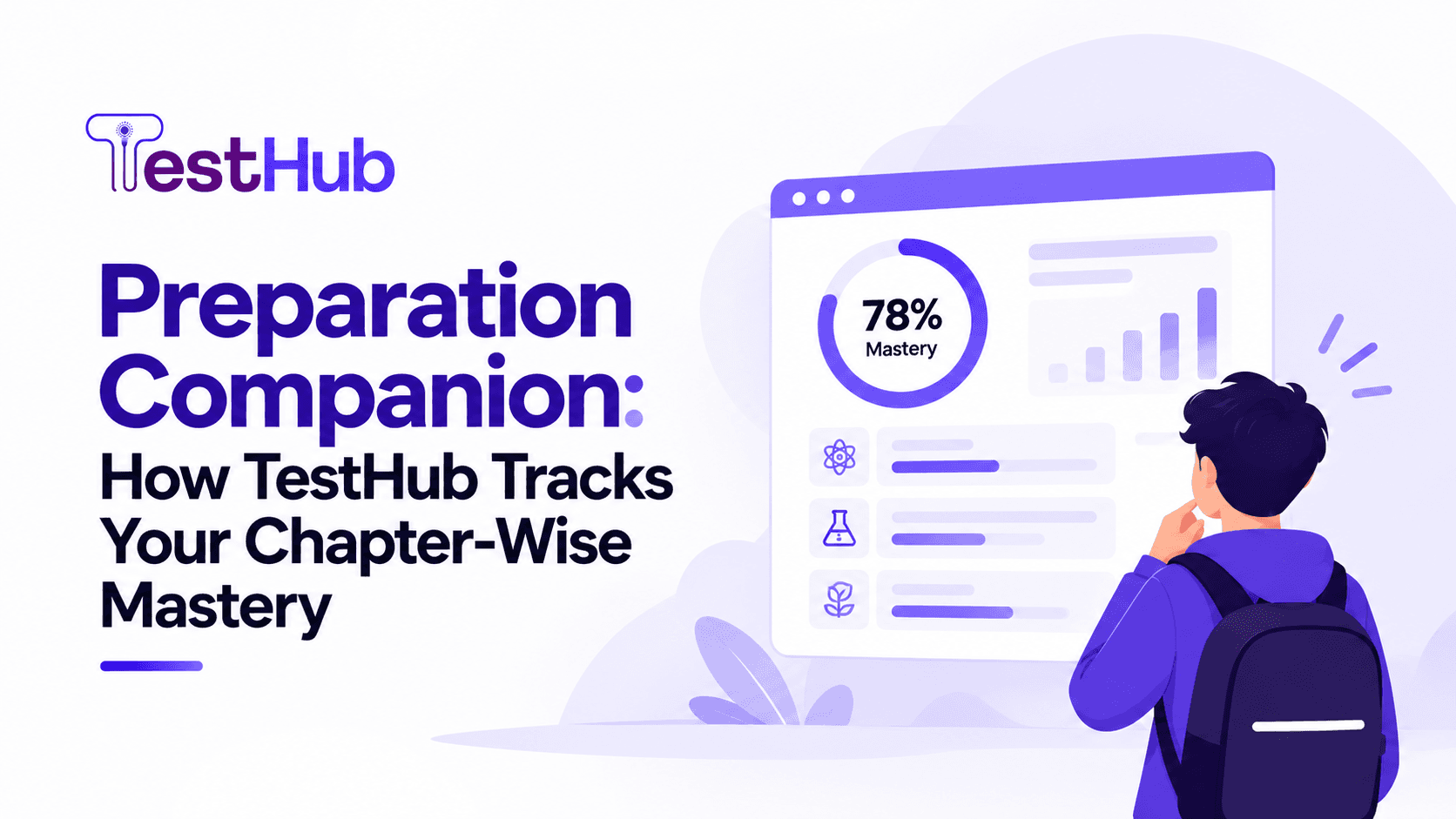
Preparation Companion: How TestHub Tracks Your Chapter-Wise Mastery
Most JEE aspirants track how much of the syllabus they've completed, but not how much they've actually mastered. TestHub's Preparation Companion turns real test and practice performance into a measurable readiness score, identifying weak chapters and recommending exactly what to focus on next. Combined with Custom Practice and mock tests, it helps you move from simply completing the syllabus to building genuine exam readiness.
21 Oct 2026 · TestHub Team
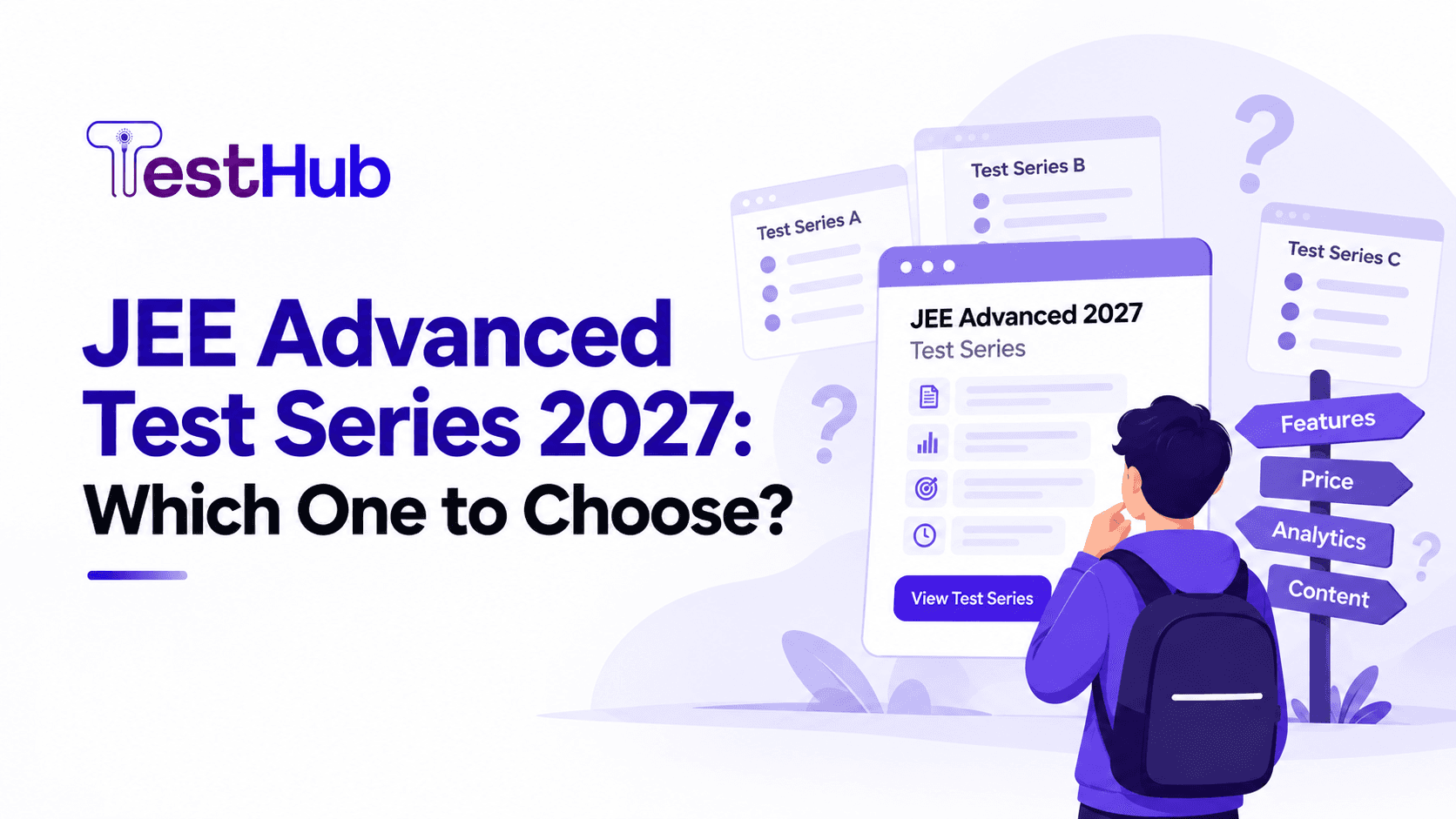
JEE Advanced Test Series 2027: Which One to Choose?
Choosing the best JEE Advanced Test Series 2027 depends on your preparation level, budget, and goals. Compare free mocks, JEE Main-focused plans, and combined Main + Advanced test series to find the right fit, with detailed solutions, performance analytics, and realistic rank predictions.

19 Oct 2026 · TestHub Team
JEE Main 2027 Registration: Dates, Fees & Application Form
Learn everything about JEE Main 2027 registration, including expected dates, eligibility criteria, required documents, application fees, and step-by-step form filling instructions. Prepare early and avoid common application mistakes.
7 Oct 2026 · TestHub Team
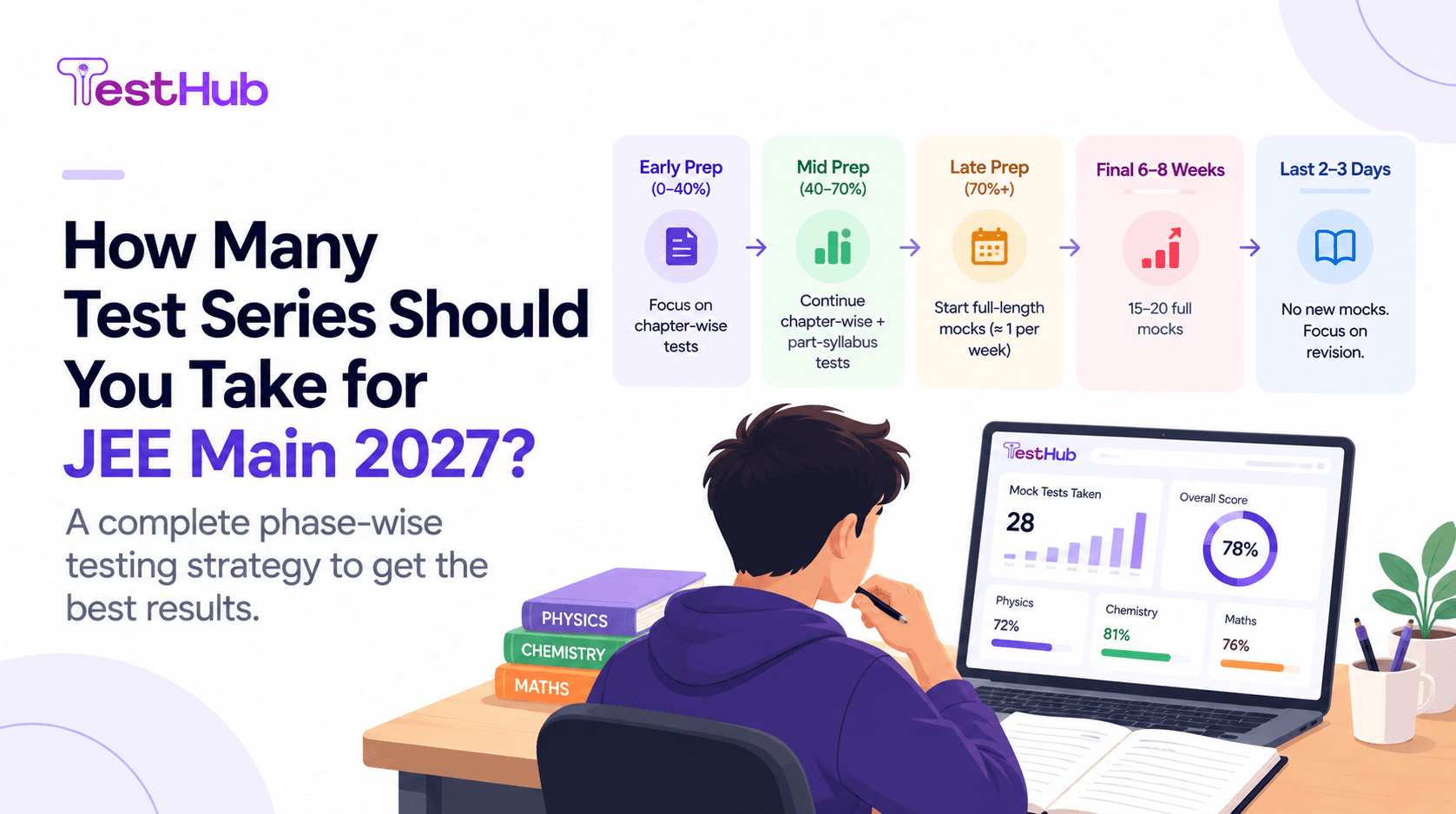
How Many Test Series Should You Take for JEE Main 2027
For most JEE Main 2027 aspirants, 20–40 full-length mock tests are a realistic target, concentrated in the final 3–4 months before the exam. But test count alone isn't enough—consistent analysis, mistake tracking, and a phase-wise testing strategy are what actually turn mock tests into score improvement.
7 Oct 2026 · TestHub Team
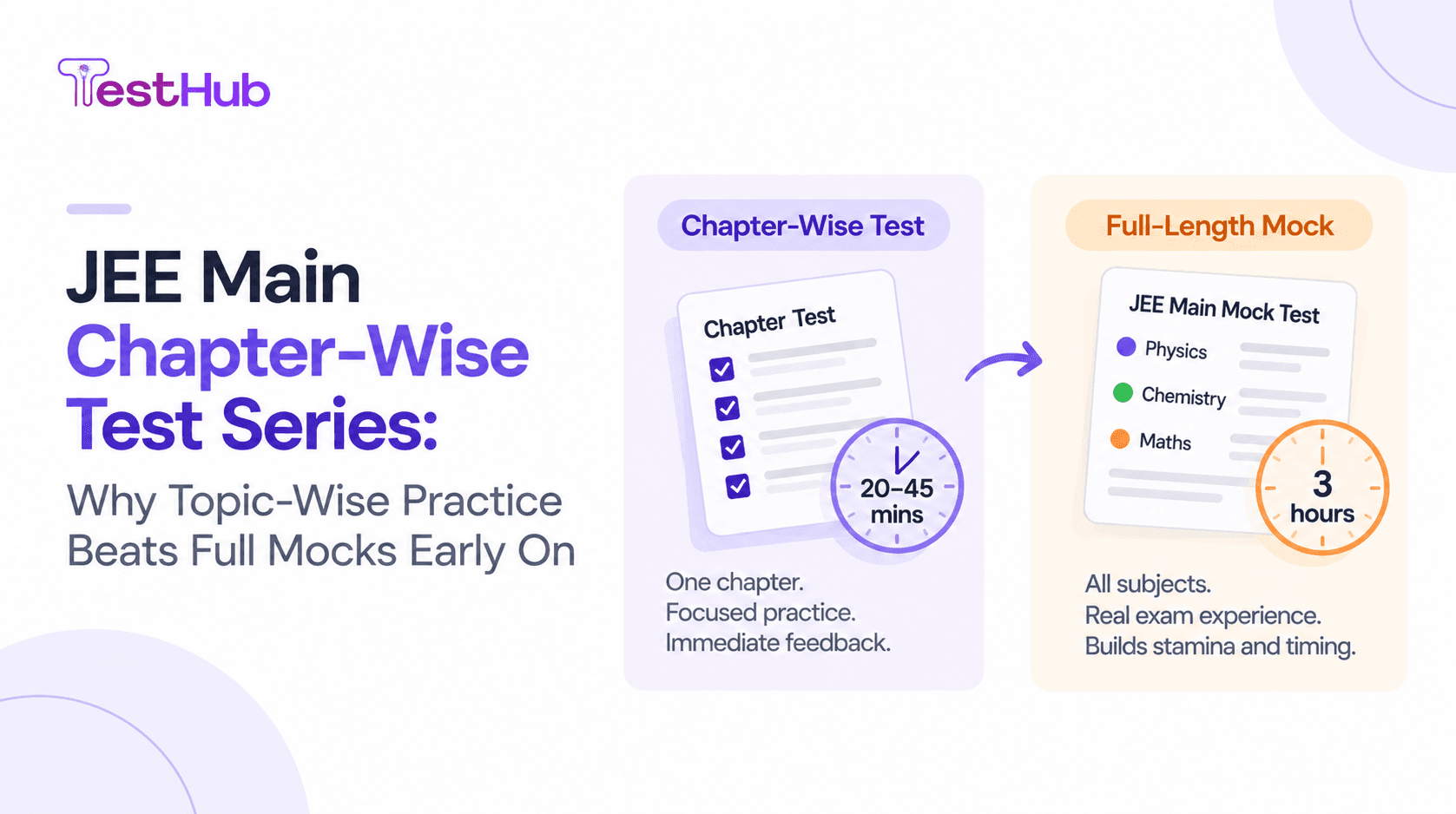
JEE Main Chapter-Wise Test Series: Why Topic-Wise Practice Beats Full Mocks Early On
Chapter-wise JEE Main tests are ideal early in preparation because they provide focused practice and immediate feedback without the pressure of a full-length mock. Learn when to use chapter-wise, subject-wise, and full-length tests to build your preparation progressively and improve your JEE Main performance.
7 Oct 2026 · TestHub Team
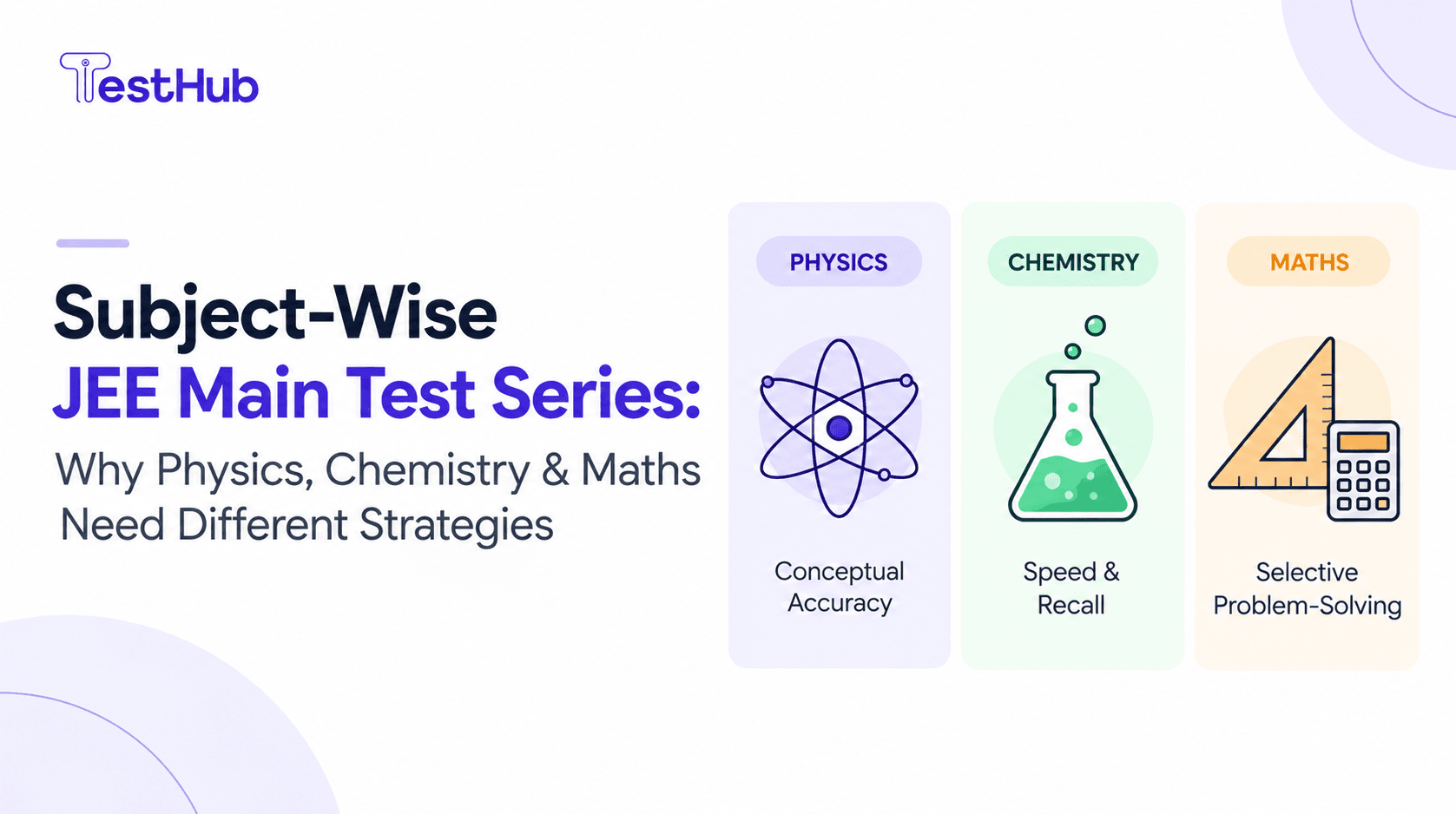
Subject-Wise JEE Main Test Series: Why Physics, Chemistry & Maths Need Different Strategies
Physics, Chemistry, and Maths require different strategies in JEE Main. Chemistry rewards speed and recall, Physics demands conceptual accuracy, and Maths requires selective problem-solving and time management. A subject-wise and chapter-wise test series helps students practice according to these differences and identify whether lost marks come from knowledge gaps, conceptual errors, or poor question selection.
