
Chemistry - STEREO ISOMERISM Question with Solution | TestHub
(Total Geometrical Isomers)
Write the total number of geometrical isomers possible for :
1. CH₃ – CH = CH – CH₂CH₃
2. CH₃ – CH = CH – CH = CH₂
3. CH₃ – CH = CH – CH = CH – CH₃
4. CH₃ – CH = CH – CH = CH – Br
5. CH₃ – CH = CH – CH = CH – CH = CH₂
6. CH₃ – (CH = CH)₃ – Ph
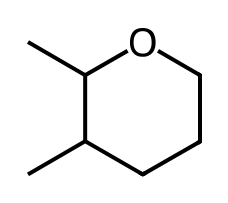
7. 
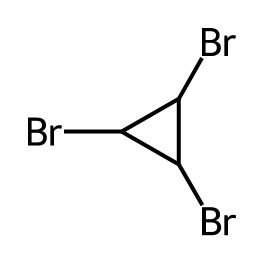
8. 
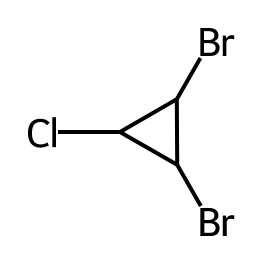
9. 
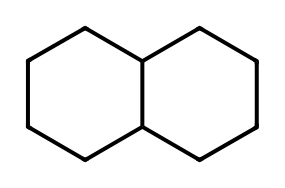
10. 
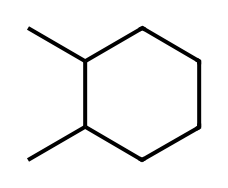
11. 
12. CH₃ – CH = CH₂
Options:
Answer:
Solution:
1. 2 : one stereogenic C=C bond (cis and trans).
2. 2 : only the C=C next to CH₃ is stereogenic; the other end is =CH₂.
3. 3 : two stereogenic C=C bonds, but the two ends of the molecule are identical (CH₃), so (E, Z) and (Z, E) coincide : (E,E), (Z,Z), (E,Z).
4. 4 : two stereogenic C=C bonds and the two ends are different (CH₃ and Br) : 2 x 2.
5. 4 : the two C=C bonds next to CH₃ are stereogenic; the terminal =CH₂ is not : 2 x 2.
6. 8 : three stereogenic C=C bonds and different ends (CH₃ and Ph) : 2 x 2 x 2.
7. 2 : the two CH₃ groups on the tetrahydropyran ring can be cis or trans.
8. 2 : all three Br on the same side, or two on one side and one on the other.
9. 3 : all three substituents cis; Cl trans to the two cis Br; one Br trans to the other two (the two Br positions are equivalent by symmetry).
10. 2 : the two rings can be fused cis or trans (cis-decalin and trans-decalin).
11. 2 : cis- and trans-1,2-dimethylcyclohexane.
12. 0 : the terminal =CH₂ carbon carries two identical H atoms, so no geometrical isomerism.
