
Mathematics - Application of Derivative Question with Solution | TestHub
MathematicsApplication of DerivativeMonotonicity-Increasing-DecreasingHard2 minPYQ_2017
MathematicsHardsingle choice
Let
Column 1 contains information about zeros ofand
Column 2 contains information about the limiting behaviour ofandat infinity.
Column 3 contains information about increasing-decreasing nature ofand
| Column 1 | Column 2 | Column 3 |
| (I) for some | (i) | (P) is increasing in (0, 1) |
| (II) for some | (ii) | (Q) is decreasing in |
| (III) for some | (iii) | (R) is increasing in (0, 1) |
| (IV) for some | (iv) | (S) is decreasing in |
Which of the following options is the only Incorrect combination?
Options:
Answer:
B
Solution:
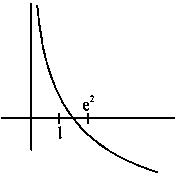
(I) , so true.
(II) ,so true.
(III) Graph of , so (III) is false as the curve does not intersect X-axis i.e, when
(IV) Is false. as tangent to the curve of is not parallel to X-axis.
As
(i) is false (ii) is true
, so (iii) is true
, so (iv) is true.
(P) , is positive in, so true.
(Q) , for in , so true.
As therefore, R is false, S is true.
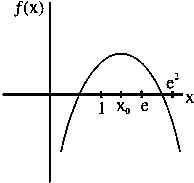
Alternate:
at where
concave down
Stream:JEE_ADVSubject:MathematicsTopic:Application of DerivativeSubtopic:Monotonicity-Increasing-Decreasing
⏱ 2mℹ️ Source: PYQ_2017
Doubts & Discussion
Loading discussions...