Chemistry - STRUCTURAL ISOMERISM Question with Solution | TestHub
Which of the following compounds are capable to undergo tautomerism in base catalysed medium?
(1)  (2)
(3)  (4)
Options:
Answer:
Solution:
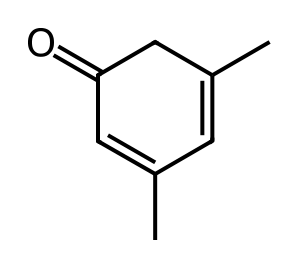
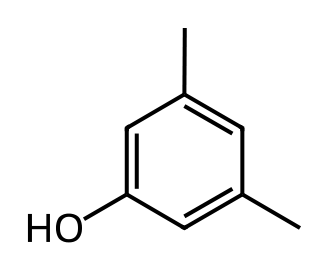
(1) Capable. 3,5-Dimethylcyclohexa-2,5-dien-1-one has an sp3 alpha to the carbonyl; base removes an alpha proton and the enolate tautomerises to 3,5-dimethylphenol - the driving force is aromatisation :
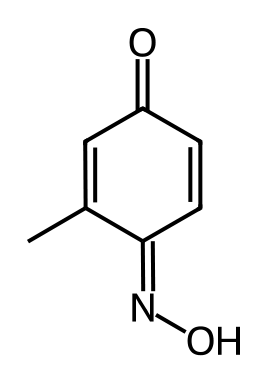
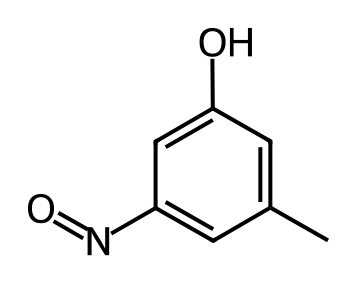
(2) Capable. The oxime (a methyl-substituted 4-hydroxyiminocyclohexa-2,5-dien-1-one) transfers a proton from oxygen to the ring and aromatises to the nitrosophenol shown - oxime-nitroso tautomerism, again driven by aromatisation :
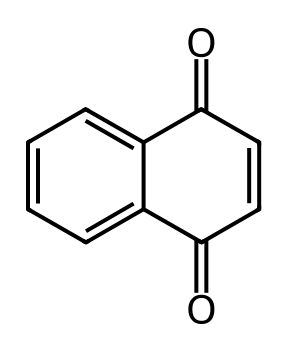
(3) No tautomerism. This is naphthalene-1,4-dione : every carbon of the quinone ring is sp2, so there is no sp3 alpha C-H that base could remove, and no enol form is accessible.
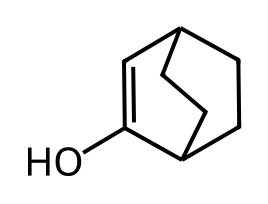
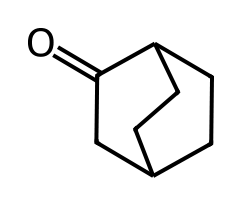
(4) Capable. Bicyclo[2.2.2]octan-2-one has alpha hydrogens (at C-3 and at the bridgehead C-1); base forms the enolate, which reprotonates to the enol shown (the forms at C-2/C-3, never at the bridgehead, which would violate Bredt's rule) :