
Chemistry - STRUCTURAL ISOMERISM Question with Solution | TestHub
Which compound in each of the following pairs would be more extensively enolized?
(i) 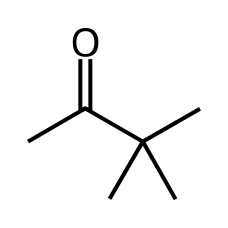 and
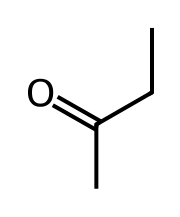
(ii) 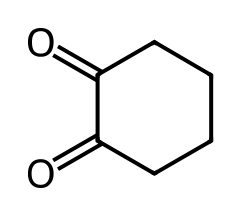 and
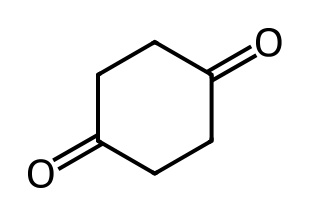
(iii) 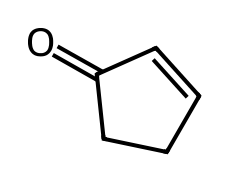 and
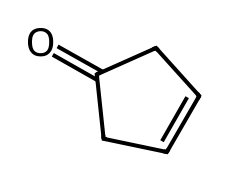
(iv) 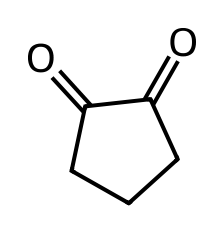 and
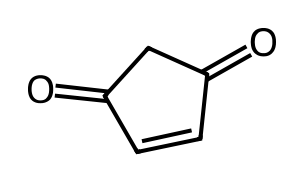
Options:
Answer:
Solution:
(i) The second compound (butan-2-one). In pinacolone, (, the alpha carbon of the tert-butyl group is quaternary, so enolisation can occur only at the lone methyl; butan-2-one has two enolisable alpha positions ( and ) and no steric crowding around the forming planar enol, so it enolises more.
(ii) The first compound (cyclohexane-1,2-dione). Its enol, 2-hydroxycyclohex-2-en-1-one, is conjugated with the second carbonyl and locked by a strong intramolecular hydrogen bond. In cyclohexane-1,4-dione the enol double bond is separated from the remaining carbonyl by an sp3 carbon - no conjugation and no chelation - so it enolises far less.
(iii) The first compound (cyclopent-2-en-1-one). Its enol is a conjugated dienol (1-hydroxycyclopenta-1,3-diene system), stabilised by conjugation with the existing double bond; the 3-enone gives only an ordinary, non-conjugated enol.
(iv) The first compound (cyclopentane-1,2-dione). It enolises to 2-hydroxycyclopent-2-en-1-one - a conjugated, intramolecularly H-bonded enediol-type system. Cyclopent-4-en-1,3-dione would enolise to a fully conjugated 4 pi cyclopentadienone-like system, which is anti-aromatic, so its enol content is negligible.
