
Chemistry - STRUCTURAL ISOMERISM Question with Solution | TestHub
Treatment of this ketone with basic D₂O leads to rapid replacement of two hydrogen atoms by deuterium. Then, more slowly, all the other nonaromatic hydrogens except the one marked 'H' are replaced. How is this possible?
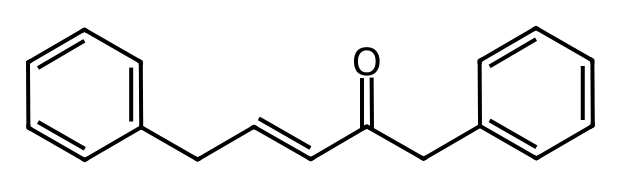
(the H on the vinylic carbon next to the benzylic CH₂ is the marked one)
Options:
Answer:
Solution:
The ketone is Ph-CH₂-CO-CH=CH-CH₂-Ph. The two benzylic alpha protons (Ph-CH₂-CO) exchange rapidly by simple enolization and reversion; repetition replaces both H by D, and with D₂O in large excess the equilibrium favours the D₂ compound. The alpha,beta-unsaturated system then allows a conjugated dienol, Ph-CD₂-C(OH)=CH-CH=CH-Ph, to form by enolization at the other end : deprotonation at the remote benzylic CH₂ gives a dienolate delocalised over the whole conjugated system, so those two hydrogens exchange more slowly (CD₂ after two exchanges). The same dienol also exchanges the remaining vinylic proton (the one between C=O and the marked carbon) by a longer route : deuteration of the dienol at the carbon next to the ketone, then loss of that remaining proton back to the dienol. The marked hydrogen - the vinylic H on the carbon bearing no enolisable relationship to the carbonyl - is never removed by any enolization pathway, so it alone is not replaced.
