
Chemistry - STRUCTURAL ISOMERISM Question with Solution | TestHub
Draw mechanisms for these reactions using just enolization and its reverse.
(i) 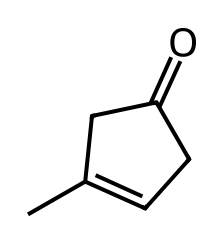 --trace of acid or base--
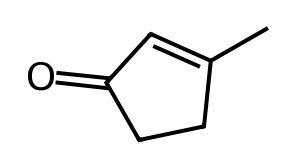
(ii) 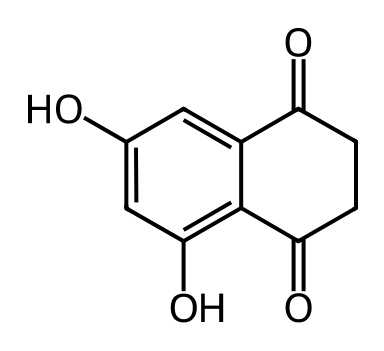 --trace of acid or base--
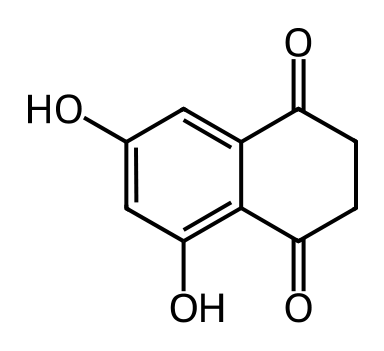 [the labelled atoms are ¹³C]
Options:
Answer:
Solution:
(i) Enolisation of 4-methylcyclopent-3-en-1-one at the CH₂ between C=O and C=C gives the conjugated dienol (2-methyl-4-hydroxycyclopenta-1,3-diene system); ketonisation of this dienol at the far carbon returns a ketone in which the double bond has migrated into conjugation with the carbonyl - 3-methylcyclopent-2-en-1-one. Two enols are possible from the first compound : one (toward the other alpha CH₂) leads back only to starting material, while the dienol leads on to product; the whole system is in equilibrium favouring the enone with the more highly substituted, conjugated alkene.
(ii) The ¹³C label does not move. The molecule simply keeps enolizing and returning to a ketone until the functional groups in the two rings have changed places : the resorcinol-type ring tautomerises through its keto (cyclohexadienone) forms, and the dione ring enolises through its hydroxy-enone forms; because each keto-enol equilibrium is reversible, repeated enolization and ketonisation interconverts the two arrangements, ending with the two C=O on the originally dihydroxylated (labelled) ring and the two OH on the originally dione ring. The labelled carbons themselves never leave their positions - only the protons and double bonds move.
