
Chemistry - STRUCTURAL ISOMERISM Question with Solution | TestHub
Which compound in each of the following pairs would be more extensively enolized?
(i) 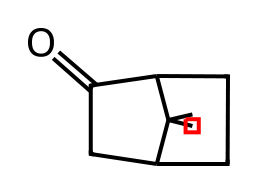 and
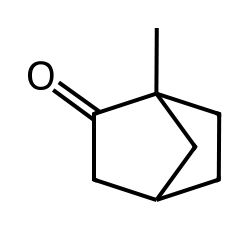
(ii) 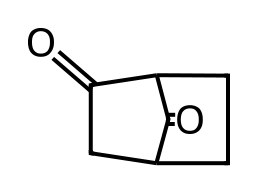 and
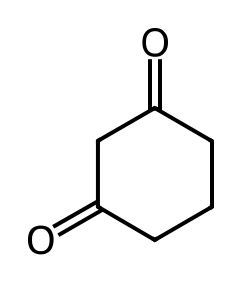
(iii) 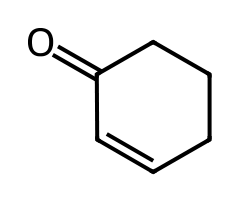 and
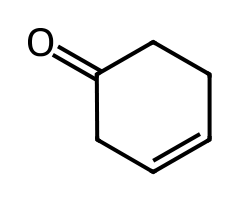
(iv) 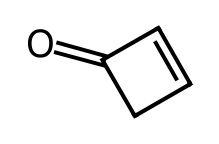 and
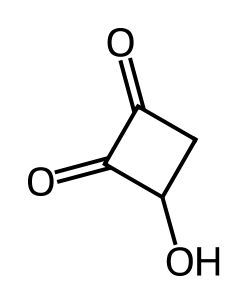
Options:
Answer:
Solution:
(i) The second compound (1-methylnorbornan-2-one). Enolisation can occur only at C-3 (a bridgehead enol is anti-Bredt in both). In the first compound the 7,7-dimethyl bridge crowds the C-2/C-3 region, so the enol/enolate, which must flatten at C-2, is destabilised by steric repulsion with the bridge methyls; the second compound lacks these methyls and enolises more.
(ii) The second compound (cyclohexane-1,3-dione). Its central CH₂ is doubly alpha and the enol is stabilised by conjugation and a strong intramolecular hydrogen bond. In the bicyclic dione the only doubly alpha carbon is the bridgehead; enolisation there would put a double bond at the bridgehead (anti-Bredt), so it enolises far less.
(iii) The first compound (cyclohex-2-en-1-one). Its enol is a conjugated dienol (1-hydroxy-1,3-cyclohexadiene), stabilised by conjugation with the existing double bond; the 3-enone gives only an ordinary, non-conjugated enol.
(iv) The second compound (3-hydroxycyclobutane-1,2-dione). It enolises to a 2,3-dihydroxycyclobut-2-en-1-one system - a delocalised, quasi-aromatic (squaric-acid-like) 2 pi enediol, strongly stabilised. Cyclobut-3-en-1-one would enolise to hydroxycyclobutadiene, which is anti-aromatic, so its enol content is negligible.
