
Chemistry - STEREO ISOMERISM Question with Solution | TestHub
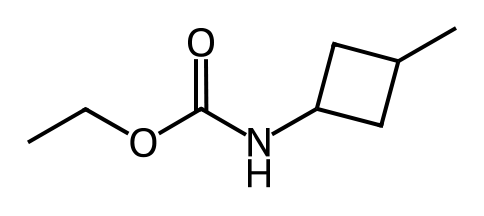
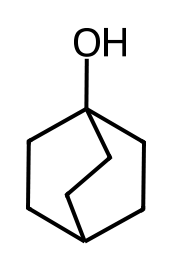
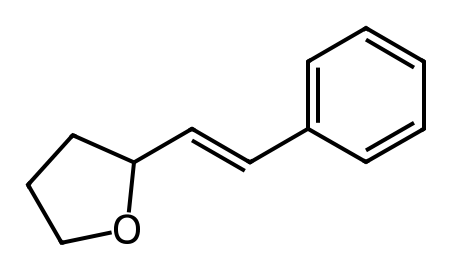
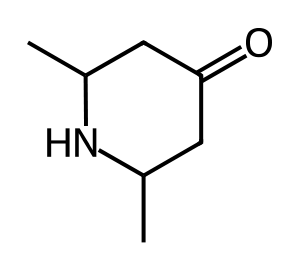
Discuss the stereochemistry of these compounds. The diagrams are deliberately poor ones that are ambiguous about stereochemistry - your answer should use good diagrams that show the stereochemistry clearly.
(1)  (2)
 (3)
(4)  (5)
Options:
Answer:
Solution:
Ans. (1) two diastereoisomers (cis and trans), both chiral. (2) a single achiral compound, no diastereoisomers. (3) two diastereoisomers (E and Z), each chiral (a pair of enantiomers each). (4) two diastereoisomers: syn (meso, achiral) and anti (chiral, pair of enantiomers). (5) two diastereoisomers: syn (meso, achiral) and anti (chiral, pair of enantiomers).
Sol. Purpose of the problem : practice at spotting stereochemistry and unravelling the different possible stereochemical relationships.
(1) Simple: the 1,3-disubstituted cyclobutane exists as two diastereoisomers, cis and trans (NHCO2Et and Me on the same or opposite faces of the four-membered ring). Since the two substituents are different there is no plane of symmetry in either, so both are chiral - each exists as a pair of enantiomers.
(2) Simple too: the cage alcohol has a plane of symmetry passing through the C-OH bond and the opposite bridge (the black dots in the book's diagram) and is not chiral. No diastereoisomers.
(3) The THF-styrene compound has two stereochemical units: the alkene, which can be Z (cis) or E (trans), giving two diastereoisomers, and the tetrahedral carbon next to the ring oxygen, which is a chiral centre. Each alkene isomer therefore exists as a pair of enantiomers: 4 stereoisomers in all.
(4) The symmetric ketone has some symmetry. There are two diastereoisomers with the MeS groups arranged syn (on the same side) or anti. The syn form has a plane of symmetry through the C=O group and is a meso compound (not chiral); the anti form is chiral and exists as a pair of enantiomers.
(5) The 2,6-dimethylpiperidin-4-one is similar: two diastereoisomers. The syn (cis) form has a plane of symmetry through N-H and C=O and is meso (not chiral); the anti (trans) form is chiral - a pair of enantiomers.
