
Chemistry - GOC Question with Solution | TestHub
X = number of reactions in which an aromatic compound is formed. Find the value of (X - 4). (No reagent is shown for (e).)
(a) 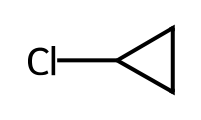 A
(b) 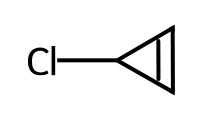 A
(c) 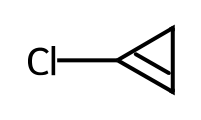 A
(d) 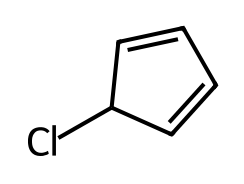 A
(e) 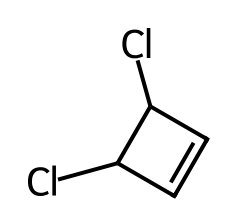
(f) 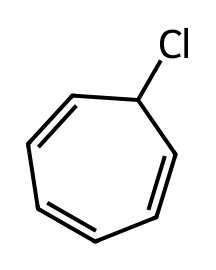 A
(g) 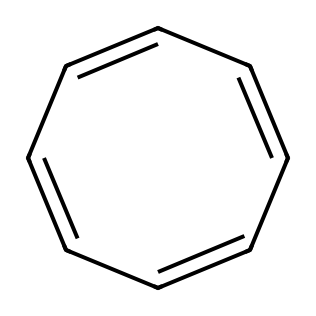 2Na
(h) 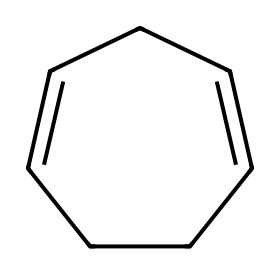 3PhLi
(i) 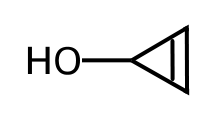 HBr
(j)  HBr
(k) 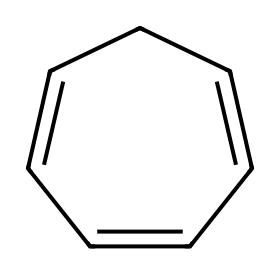 HI
(l) 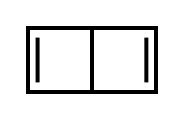 , Δ
(m) 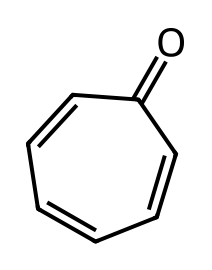 HBr
(n)  2Na
Answer:
Solution:
(a) The product is the cyclopropyl cation, which has no π electrons in the ring : not aromatic. (b) The product is the cyclopropenyl cation (2π) : aromatic. (c) Cl is on an carbon, so a vinyl cation forms : not aromatic. (d) The product is the cyclopentadienyl cation (4π) : anti-aromatic. (e) No reagent, no reaction. (f) The product is the tropylium ion (6π) : aromatic. (g) 2Na converts tub-shaped cyclooctatetraene into its dianion (10π) : aromatic. (h) PhLi cannot give an aromatic species from this diene : no. (i) HBr protonates OH, water leaves and the cyclopropenyl cation (2π) forms : aromatic. (j) HBr adds to the C=C to give bromocyclopropane : no. (k) HI protonates the triene and gives a non-aromatic cycloheptadienyl cation : no. (l) Dewar benzene rearranges to benzene with and heat : aromatic. (m) HBr protonates the C=O oxygen and gives the hydroxytropylium ion (6π) : aromatic. (n) 2Na gives the cyclobutadiene dianion (6π) : aromatic. Aromatic products form in (b), (f), (g), (i), (l), (m) and (n) : X = 7, so X - 4 = 3.
